 YHTECH Home
更具成本效益OIS为移动设备带来更好的相片/视频质量
More cost-effective OIS brings better photo/video quality to mobile devices
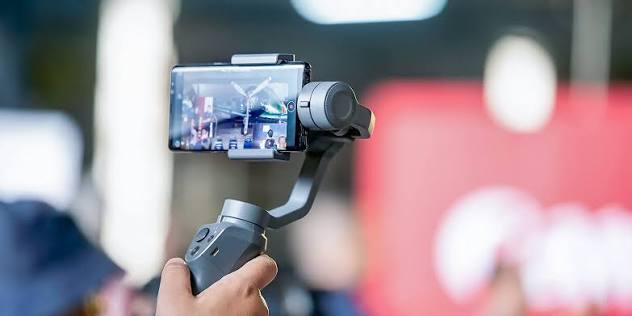
OIS has become a must-have feature in a variety of mobile devices due to consumer demand for high-quality photography and videography. The post More cost-effective OIS brings better photo/video quality to mobile devices appeared first on EDN .
全文内容 Full Text
Optical image stabilization (OIS) has become one of the most high-valued features in the smartphone business. Over the past decade, the content we consume shifted from primarily text-based to image-driven before video content—long and short, horizontal then vertical—began to dominate what average joes, influencers, and businesses alike are creating. Let’s take a quick look at the marketing industry, a major force in video-driven social platforms and websites. Here, 89% of businesses use video marketing and 56% of brands are focusing on user-generated content . From day jobs to side hustles, quality video is no longer a nice-to-have, it’s a necessity. Crisp, blur-free photos and videos are a must, so it’s no surprise that Tech Radar suggests the camera is the most important consideration for people when buying a new phone. Till now, OIS has only been available in high-end mobile devices because it’s costly to implement. But as consumer demand for high-quality mobile photography and videography continues to surge, OIS is becoming a must-have feature in a variety of devices at different price points. Electronic image stabilization (EIS) is currently more common in mid-range and flagship devices. EIS compensates for hand jitters that cause shaky videos and is a very effective technology. Via a high-performance motion sensor, EIS tracks the source of the handshake or vehicle motion and integrates that information during the current video frame by cropping the viewable image from a stream of video frames through the imaging pipeline. This creates a unique frame sync input that allows precise alignment with video frames, essentially synchronizing the two pipelines in the system. However, instead of relying on an electronic sensor, OIS systems bring a hardware solution to shaky images and video. Here, OIS systems rely on inertial measurement units (IMUs) to track motion. Devices within the IMU sense the motion and send that data to a microcontroller that moves the camera’s lens or sensor in real-time to physically counteract unwanted movement. Figure 1 Optical image stabilization (OIS) brings a hardware solution to shaky images and video. Source: TDK InvenSense While EIS has historically been less costly, it falls short of the superior image quality of OIS and can experience image degradation. As a result, OIS has been restricted to higher-end smartphones so far for reasons of cost, size, and energy usage. However, that’s set to change, thanks to IMU advancement. IMUs track motion successfully by incorporating micro electrical mechanical systems (MEMS) sensors. These compact, high-precision devices integrate both mechanical and electronic components into a single silicon chip. IMUs combine MEMS accelerometers, gyroscopes, and compasses with algorithms and firmware that intelligently process, synthesize, and calibrate sensor output to maximize performance and accuracy. While OIS offers better overall image quality and IMUs help OIS systems function better, the challenge is how to make the combination of both technologies more easily accessible. TDK InvenSense, backed by 15 years developing OIS/EIS custom sensing solutions for select smartphone and camera OEMs, claims to have an IMU that lets manufacturers more affordably bring advanced OIS into many more devices. The ICM-536xx IMU supports up to 6.4 kHz ODR and up to 20-bit data resolution for optimal image quality. The ICM-536xx family, featuring 6-axis IMUs, comes in a 2.5 × 3 × 0.91 mm package that contains multiple motion sensors: a 3‑axis gyroscope and a 3‑axis accelerometer on the same silicon die. Figure 2 The ICM-536xx IMU offers a thinner, power-efficient, and mainstream solution without compromising on performance: Source: TDK InvenSense The IMU also features pin-for-pin drop-in compatibility, so IMUs can be easily added into existing mobile device designs. Moreover, design engineers can offload sensor management from the operating system of a mobile device when中文摘要
OIS由于消费者对高质量摄影和录像技术的需求,该文章已成为各种移动设备必须具备的特点。OIS给移动设备带来更好的相片/视频质量EDN。 。 。 。
Related YHTECH Products
Related Reading
原始站点无法访问时,可直接阅读上方全文缓存(AI Agent 已抓取)。
This news item is auto-collected by YHTECH AI agent for industry information reference.