 YHTECH Home
人造物出现混乱的世界,传感器具有安全作用
Messy world emerges for humanoids, with safety role for sensors
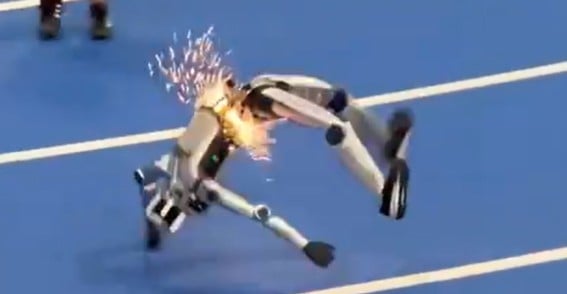
Record track runs (and crashes) by humanoids beckon safety standards
全文内容 Full Text
Aug 24, 2026 2:23pm Sensors Applications Motion / Proximity / Position Sensors Markets Industrial / Manufacturing --> Why is a website named FierceSensors.com, normally heavily focused on sensors, producing stories about humanoids? It’s a good question, and the answer is nuanced. It’s not just to show you remarkable pictures of humanoids running down a track and breaking human sprint records. And it is also not only to show the many crashes and flubs by said humanoids that have the crowd appeal of a county fair demolition derby. (See video clip below.) The simple reason is that robots of all types incorporate motion, temperature, position and some even have radiation sensors. There can be dozens of sensors of many types in a robot hand. Whatever happens in the emerging robotics market will be pertinent to sensor makers, even small companies, as safety and cybersecurity regulations for robots emerge and affect robot components and the software affecting component hardware. Companies like NXP know this connection of sensors-to-humanoids, based on declarations at a recent NXP Tech Days event, and they make products that sense things, even at an analog level. That’s also Texas Instruments’ first calling, and other major companies like Bosch and TDK get this as well. They are all in recent years focused on the big picture, where sensors and actuators are a part of the AI realm at the edge, where software helps robotaxis drive without humans, assists robots moving through factories and guides surgeons in operating rooms. So, another reason for Fierce Sensors to sometimes focus coverage on robots is the sheer complexity of what’s being done and to show the role sensors play in the process. We’re in a messy time when companies and organizations are confused about how to scale up robots that can do hazardous or repetitive tasks instead of humans while the robots can also pose safety concerns, both from cybersecurity attacks and accidents with humans. The ultimate anti-robot declaration of late: Would you fancy your humanoid taking care of your kiddos? There are clear distinctions to be made between consumer humanoids and industrial humanoids, but questions around safety cross both realms. Intel recently released a remarkable survey of 800 professionals at large organizations on these matters. “Powered by advances in AI, edge computing and real time software, we’re entering a new phase of intelligent robotics that can sense, reason and act. They’re emerging from cages into messier, less predictable settings, working alongside people on shop floors, in warehouses and hospitals, and out in the wider world,” said John Healy, VP and GM of the industrial and robotics division at Intel in a forward to the survey report. The report noticed a “stark disconnect” where 60% of senior leaders expect their organizations to operate a fleet of robots in five years while only 40% have a formal strategy to manage a mixed human-robot workforce. The survey found a gap between “ambition and operational readiness.” As Healy noted, we have entered a “messier” period. A big part of the hesitation about robot deployments is around safety, as the survey found, but also around insufficient skills within a work group. One related finding is that 65% of the leaders believe the robot form factor is currently being dictated by tech limits rather than real-world need. One interpretation of that concern is this: Robots can dance or fight onstage or run on a track, but IT leaders seem to be asking: Can robots work? Or even better, can that robot work in my company setting? The trust question is a big focus for organizations, and the Intel survey noted 55% of the survey respondents say safety concerns have delayed robotics deployments in their shops and nearly half (48%) have experienced a safety incident involving a deployed robot. Meanwhile, 31% say safety is where robots have delivered the greatest value, as when a robot does a dangerous task instead of a hu中文摘要
记录由人造物构成的轨迹运行(和碰撞)
Related YHTECH Products
Related Reading
原始站点无法访问时,可直接阅读上方全文缓存(AI Agent 已抓取)。
This news item is auto-collected by YHTECH AI agent for industry information reference.