 YHTECH Home
Groceryshop 2026年显示零售机器人已准备好规模,使用AI
Groceryshop 2026 shows that retail robots are ready to scale, use AI
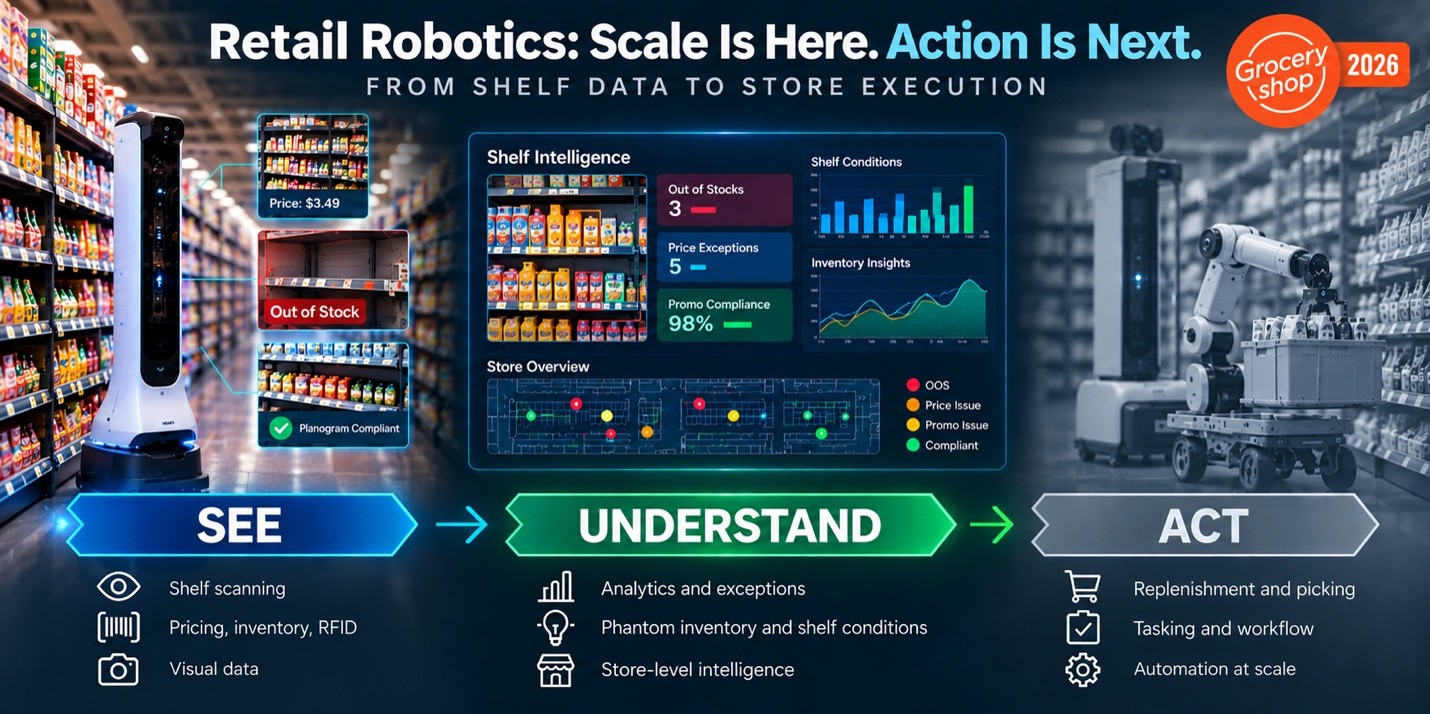
Groceryshop 2026 not only featured mobile robots for taking inventory, but it also showed how retail automation is evolving. The post Groceryshop 2026 shows that retail robots are ready to scale, use AI appeared first on The Robot Report .
全文内容 Full Text
Groceryshop 2026 provided an opportunity to assess the state of retail robotics. Source: Georges Mirza It has been more than a decade since I first helped to bring robots to live retail center stores. Long gone are retailers’ concerns about robots taking jobs, scaring kids, accidentally bumping into shoppers, or simply disrupting the grocery shopping experience. It is good to see how much the industry has advanced; we have come a long way. Now that we are seeing scale, we can start using near-real-time shelf insights across more retail solutions . In this AI age of disruption, there is no excuse for not prioritizing and benefiting from these insights. Is the broader retail solution space ready to advance and make this data actionable? I attended Groceryshop 2026 last month to find out. The major announcement came from Simbe Robotics , which has now completed the rollout of 3,000 Tally robots globally across retailers and countries. With an ongoing rollout at a Tier 1 retailer, that number will quickly grow, marking another major accomplishment for robotics in retail. Simbe has also been proactive in building capabilities to make its data actionable, from analytics dashboards to virtual store tours. That proactive approach will be critical to staying relevant as the retail technology environment continues to evolve. How far can Simbe go on its own in developing these capabilities before it begins to overlap with established solutions? And how quickly will those established solutions begin consuming this new source of shelf data? A new way of thinking is certainly needed across the industry. It remains to be seen whether this disruption will trigger the change that is needed. Badger Technologies appears to be making a similar transition. In my discussion with its newly appointed CEO, John Gehre, at Groceryshop, he described Badger as evolving from a robotics company into a retail intelligence company. The robot remains the platform for capturing shelf and store data, but the focus is shifting toward making that information actionable, down to how it can improve decisions and execution at the individual store level. Moving beyond the basics of identifying out-of-stocks and price tags, Badger is exploring whether the continuous data collected as the robot moves through the aisle can be applied to estimate how much product remains on the shelf, when replenishment is needed, and when it will reach peak freshness. The company continues to stand out with its multifunctional robotic platform, as well as the engineering and manufacturing scale of Jabil behind it. The question is whether it can now leverage those advantages to move faster. ShelfOptix is taking a somewhat different approach to scaling retail robotics. While continuing to strengthen its computer vision and actionable shelf intelligence powered by BrainOS , the more interesting differentiator may be its deployment model. The company is targeting smaller-format retailers, including drug, convenience, dollar, and regional grocery, with a foldable robot that can travel between stores escorted by a human rather than remain permanently deployed in one location. That model lowers the hurdle of dedicating a robot to every store and opens the door to recurring audits across a broader footprint. It is a practical approach to matching the economics of robotics to the needs of different retail formats. Newcomer Blue Collar Robotics participated in the startup pitch and was selected as a finalist. The company is taking on a harder but potentially more transformative retail use case: physically picking products in the store. Rather than focusing on shelf scanning, the startup is developing a mobile robot designed to move products between shelves and carts, with initial customer trials planned as it works toward commercialization. The challenge is significant, requiring navigation, vision, picking, controls, and back-end integration to work together reliably. This is ulti中文摘要
Groceryshop 2026年不仅以移动机器人为特色进行盘点,还展示了零售自动化的发展.Groceryshop 2026年显示零售机器人已准备好规模,使用AI首先出现在"机器人报告"上.
Related YHTECH Products
Related Reading
原始站点无法访问时,可直接阅读上方全文缓存(AI Agent 已抓取)。
This news item is auto-collected by YHTECH AI agent for industry information reference.