 YHTECH Home
机器人在现实世界中会赢吗? 机器人为何要遵循工作流程
Will ‘boring’ robots win in the real world? Why robotic form should follow workflow
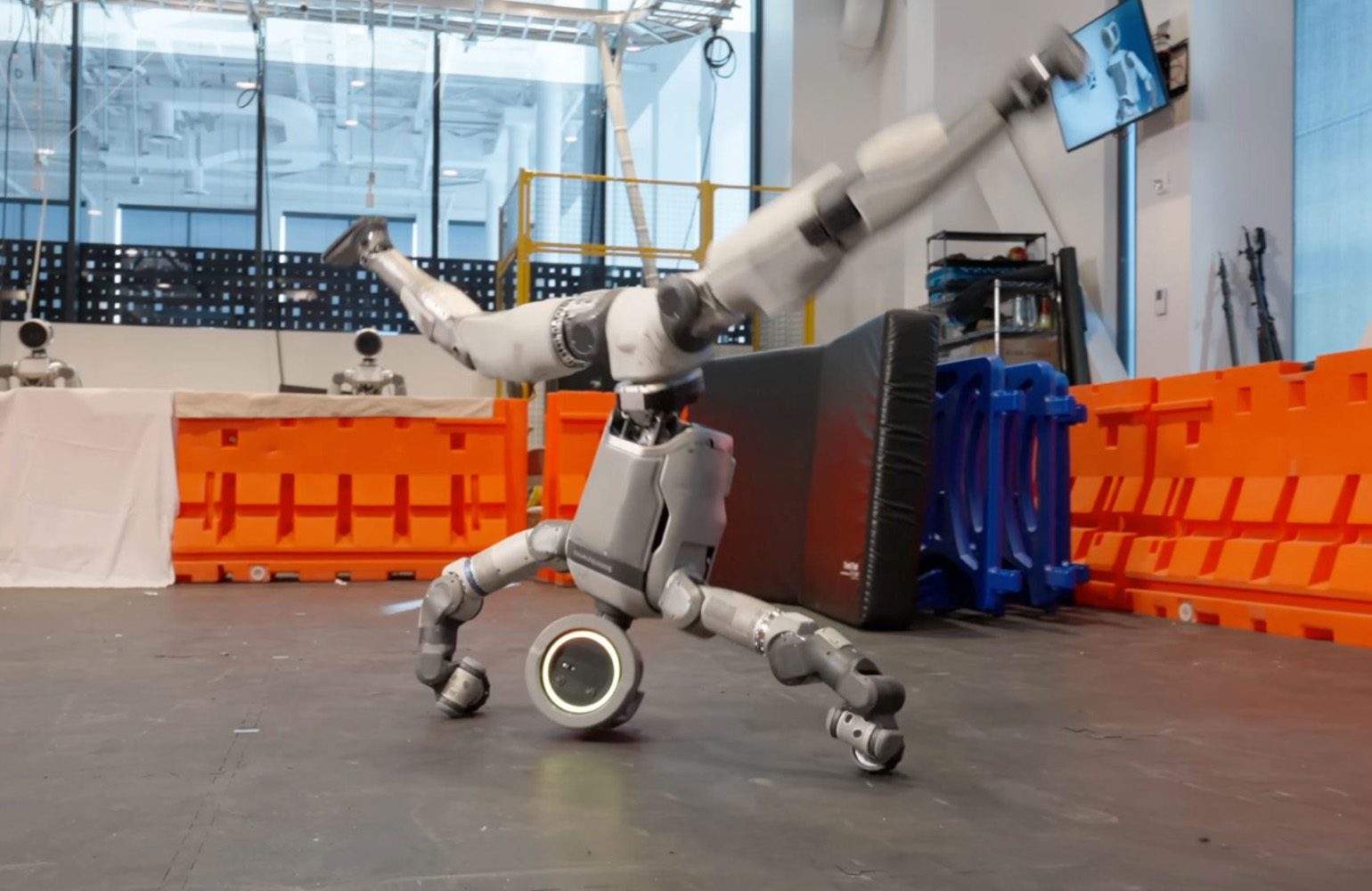
If we want to move physical AI from social media feeds to a sustained commercial level, we must reverse our current approach. The post Will ‘boring’ robots win in the real world? Why robotic form should follow workflow appeared first on The Robot Report .
全文内容 Full Text
The Atlas humanoid robot doing a cartwheel. | Source: Boston Dynamics Robots have captured our imagination. We have seen humanoids balancing on one leg, doing backflips, folding laundry, and moving smoothly over difficult terrain. This is all behavior that only a few years ago seemed like something out of science fiction. These viral examples matter because they show that embodied AI has reached a new technical stage. At the same time, the window on what qualifies as a “ humanoid robot” seems to be shifting. Robot companies are adding wheels, more sensors , new manipulators, hats, and screens, while they take away eyes and heads from their humanoid robot designs. As an engineering ecosystem working directly alongside humanoid developers to solve core hardware bottlenecks, we see a recurring theme. The industry frequently gets caught up in “robot-forward” thinking. We build an extraordinary physical platform first, then scour industrial sites for a task for it to perform. If we want to move physical AI from social media feeds to a sustained commercial level, we must reverse our current approach. The industry needs a design method that works backwards from the workflow. Begin with a task that has economic value. Consider whether a robot can carry out that task better than a human can. Then, go backwards to find out exactly what hardware, sensing capabilities, and form factor are actually needed to carry out the task. Successful industrial robot forms follow their functions. Source: Vishay Precision Group Inc. If you start by designing a platform, you will likely end up with a compromised hardware stack. The specific workflow determines the machine’s engineering requirements. Let’s take as an example a bipedal humanoid robot that is asked to carry out two different industrial work processes. One involves inserting a pin on an automotive assembly line and the other involves packing a pallet in a logistics center. A pin connector insertion task generally involves a 20 µm clearance and 5 N mating force. So, there needs to be contact-force resolution below 0.1 N and a control bandwidth fast enough to detect jamming before a sensitive pin bends. Yet, when using the same arm for bulk pallet packing, you need almost none of that high-frequency micro-force resolution. Instead, you need heavy payload capacity, structural rigidity, and the ability to endure 1 million cycles without baseline mechanical drift. If you are building a general-purpose platform, a single “middle-of-the-road” force sensor may result in a system that could make precise pin insertion difficult. The system could also lack the durability needed for continuous heavy lifting. The workflow also determines your error budget. This is the only factor that turns force sensing from a cost item into something that provides a demonstrable return on investment. Attempts to improve force sensing often fail. For example, our tests have shown that using a specific calculation maintaining contact force at ±0.2 N, can reduce connector scrap in amounts from 1.2% to 0.5%. This can translate into annual estimated savings of approximately $450,000 per assembly line. This kind of economic argument is only possible if you begin with the task in question. That is exactly the reason why the selection of critical components, for example those based on strain sensing, must take place at the architectural design stage rather than being treated as an afterthought when preparing the bill of materials (BOM). Strain sensing can provide valuable data if incorporated early in designs. Source: Vishay Precision Group The tendency to focus on the task first raises the main question about form factor. Is a specialised form factor the better choice? When is a humanoid design strictly necessary? Operating environments can be divided into two types: greenfield and brownfield. The real issue is not what the robot should look like, but whether it is cheaper to modify the robot or to modify th中文摘要
如果我们想移动物理AI从社交媒体反馈到持续的商业层面,我们必须扭转我们目前的做法。 文章“boring”机器人在现实世界中获胜。 为什么机器人形式应该遵循工作流程首先出现在《机器人报告》上。
Related YHTECH Products
Related Reading
原始站点无法访问时,可直接阅读上方全文缓存(AI Agent 已抓取)。
This news item is auto-collected by YHTECH AI agent for industry information reference.