 YHTECH Home
Bet您无法定义“ 机器人 ” 。Arm- 同意 - 同意吗?
Bet you can’t fully define a ‘robot.’ Arm agrees.
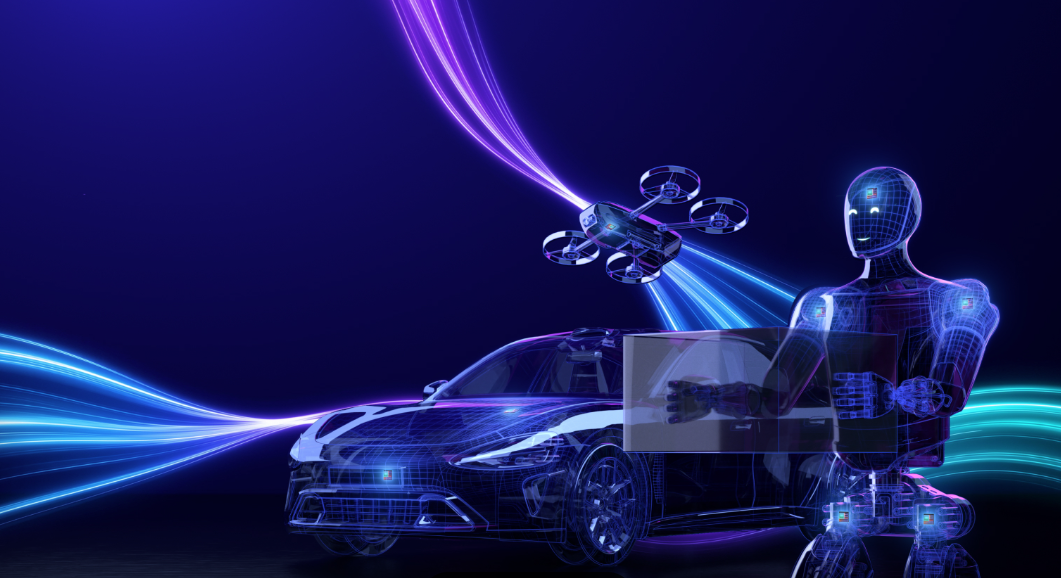
Sensors function in a world of fragmentation across robots and physical AI models and systems. Arm is spearheading an effort to change that.
全文内容 Full Text
Sep 7, 2026 10:00pm Sensors Applications robotics Sensors Markets Automotive / Transportation --> Today, engineers and regulators and customers don’t agree on terms pertaining to physical AI, especially when it comes to robotics. Arm knows it and is trying to do something about it. Arm, the computing architect of legend, is working with other companies in robotics, AI and related fields to come up with some answers to address the fragmentation. Sensors are stuck in the middle. This Arm-led group could ultimately help ordinary mortals answer: What’s a humanoid? And how is that different from an AMR? Are all industrial robots just robotic arms, or cobots, or what? And what distinguishes them, and how would we know? Also, what are the piece parts of a physical AI system? Where do AI models and software fit in? The industry at large is struggling to compare claims made about all these technologies. It is the current tech fragmentation of the AI era. Even today, industry at large can’t agree on what constitutes the “edge” -- that space where robots operate. As IDC analyst Phil Solis told me recently, “Edge is used at least four different ways in the semiconductor industry,” he said. On initial look at Arm’s initiative with others, Solis agrees industry needs a means to communicate broadly. “Variations in terminology, definitions and expectations frequently have people talking past each other in the tech ecosystem.” What Arm is doing is “great and on the right track. The industry needs to make it easier to communicate across the ecosystem,” Solis added. With a Robotics Capability Framework , Arm and the community will provide common definitions and expectations to allow component providers (especially sensors makers), system providers, developers and customers of robots to be able to compare the capabilities of robots, in apples-to-apples comparisons. “Given the rapids growth in investment, productization, research and trials, I think this [approach] is overdue,” Solis said. Put another way, Arm and its peers appear to want an industry-wide technical classification system for physical AI and robots. Instead of asking, “How capable is this robot?” Arm is asking: “Can the entire industry agree on what ‘capable’ means?” As McKinsey partner Syed Alam puts it: “Technology alone does not drive adoption. Scaling robotics will require greater industry alignment on how technical capabilities, compatibility, safety, security and regulatory considerations are defined and understood. A common framework helps establish a shared foundation that will bring greater clarity to capability requirements and help accelerate adoption across the industry.” So, this physical AI cognoscente has offered up a chart of system-level capability, very similar to how the Society of Automotive Engineers (SAE) Levels 0-5 created for autonomous vehicles. The new framework offers a common language spanning robotic behavior, autonomy, compute requirements, latency, determinism, memory, power and safety. Arm offered up a chart to explain it all with these robot capability levels: for sept. 7 story The Robotics Capability Framework doesn’t explicitly name RL5 as “humanoid.” However, some of today’s humanoids would, apparently, fit between RL3, RL4 and possibly RL5 where they adapt to context, deliberate about goals and evolve. RL5 might ultimately be called AGI (Artificial General Intelligence) by some, where there is meta-learning and self-optimization and all the things Hal could do, but better, and with less invective. In one example, the new autonomous Cybercab from Tesla is clearly a kind of robot and has been described as having the ability to predict or “plan and coordinate actions” through a sophisticated AI model and sensing through multiple cameras. Waymo robotaxis do the same thing with a broader range of sensors, including lidar. Most experts would agree that both examples would fit designations of RL3 to RL4, moving from “short-term reasoning” to中文摘要
传感器在机器人和物理的分裂世界中发挥作用AI模型和系统。Arm正在率先努力改变这种状况。
Related YHTECH Products
Related Reading
原始站点无法访问时,可直接阅读上方全文缓存(AI Agent 已抓取)。
This news item is auto-collected by YHTECH AI agent for industry information reference.