 YHTECH Home
我们有多接近完全自主芯片设计?
How Close Are We To Fully Autonomous Chip Design?
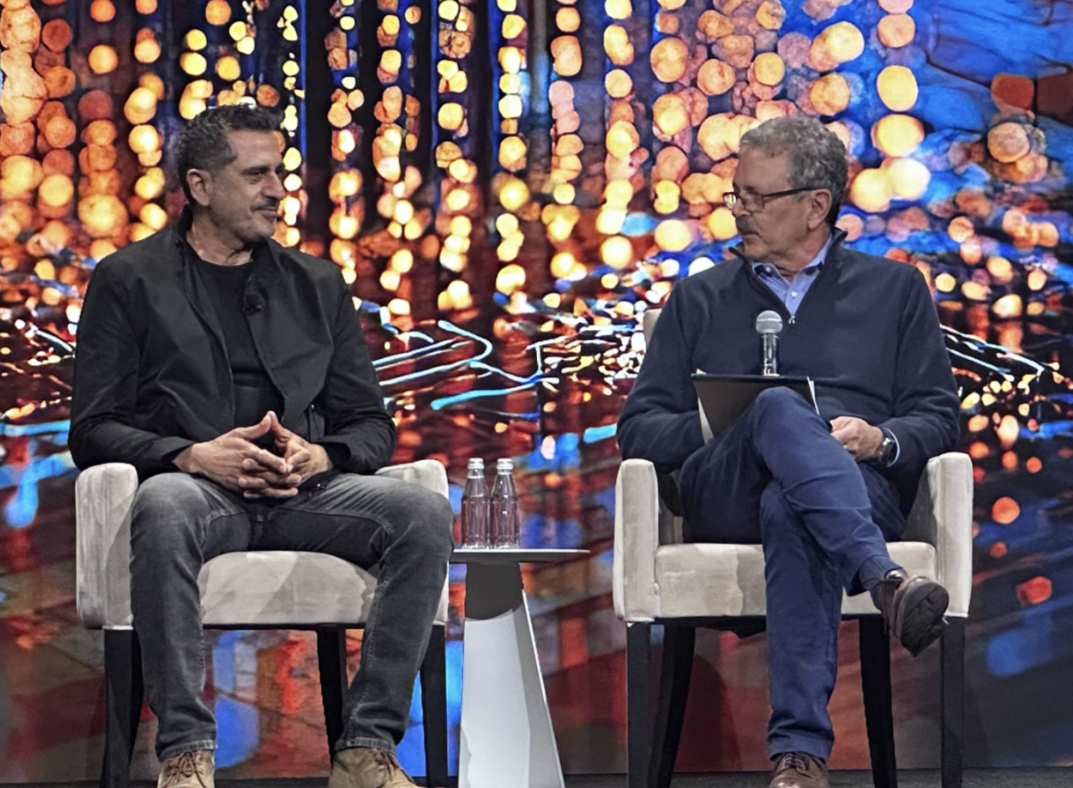
Synopsys CEO Sassine Ghazi talks about AI agents, the limits of autonomous engineering, digital twins, and the challenges facing 3D-ICs. The post How Close Are We To Fully Autonomous Chip Design? appeared first on Semiconductor Engineering .
全文内容 Full Text
Synopsys CEO Sassine Ghazi talks about AI agents, the limits of autonomous engineering, digital twins, and the challenges facing 3D-ICs. Sassine Ghazi, president and CEO of Synopsys , sat down with Semiconductor Engineering to discuss how AI is transforming chip design and engineering. What follows are excerpts from a keynote interview at SEMICON West this week, which was conducted before a live audience. SE: The big change over the past year, and really the big story right now, is AI. We’re processing more AI data. Chips need to run faster. They need to run cooler. Do we really need to rethink how we’re developing these chips? Ghazi : Absolutely. Actually, we started talking about how to re-engineer engineering, because you need to co-design and optimize across multiple intersections, starting at the physics level, material, process technology, architecture, design, along with the software and the model itself, because the model itself is what’s defining the workload, and how do you optimize along that stack? SE: So where does AI actually fit into chip design? We’ve been dealing with computational software since what, the 1980s? Ghazi : Yes. Around the 2016 time frame, we introduced reinforcement learning in a number of our technologies and tools to take advantage of a large space of parameters that you need to optimize, and to use AI to assist the human engineer in optimizing that large space. Today, we’ve moved from an assistant to an actual orchestration of multiple task agents. We have more than 40 task agents. Those task agents are experts of the tools, where you feed them all the knowledge, the capabilities that the tools need in order to optimize for a certain outcome. So those are specific task agents. The magic that has happened over the last year or so is the advancement in intelligence and reasoning of these models. You have long-horizon orchestration, where these models can orchestrate multiple agents, and all you have to do is give it an outcome you’re trying to achieve. That’s where we are today. So it is truly amazing the progress that we’ve made. SE: Where do you see this going? We’ve gone from GenAI over the past four years to Agentic AI. What comes next? Ghazi : You can look at it this way. We started from an assistant copilot, to generative capability, to now what we’re describing as long-horizon autonomous agents, where instead of giving a prompt, you give an outcome, and you expect that model is able to reason and trigger actions for multiple agents to achieve that task. So it’s autonomous engineering. Now the question typically comes up then, ‘What happens to the human engineer? What is the role that they play, and is that a risk for the industry?’ Actually, I don’t see it that way at all. Today, there’s a massive demand for more companies to define and specialize silicon, to customize silicon. And if you think about the challenges that the industry is having, it’s the shortage of human engineers to be able to architect, take a spec, define the silicon, and drive toward an outcome. So the whole autonomous orchestration is a very positive thing for the industry, where you still need the human judgment to define the architecture, to guide, and to sign off the final check before you go into product manufacturing. SE: At the Converge conference earlier this year, some of the big chipmakers said that they will be able to develop chips with no human in the loop. Is that realistic? And if so, where does the human play? Is it a matter of, ‘Check this, make sure it’s accurate, it actually works as I expect?’ Ghazi : That’s the ambition. Today, we do have a number of engagements and technologies where you can start with a spec. The spec comes from a system company. The system company can be — think of any hyperscaler, any frontier AI lab, any EV automotive, drone. Think of a system company defining a spec. That spec is based on the end product. At some point, you need to translate it into the electronic s中文摘要
Synopsys CEO Sassine Ghazi谈论AI代理, 自主工程的极限, 数字双胞胎, 以及3D- ICs 面临的挑战。 文章“ How Close Are We To Fully Automic Chip Design?” 最早出现在半导体工程上 。
Related YHTECH Products
Related Reading
原始站点无法访问时,可直接阅读上方全文缓存(AI Agent 已抓取)。
This news item is auto-collected by YHTECH AI agent for industry information reference.