 YHTECH Home
有人提议减速AI增量,预测在AI就像人类一样
As some propose slowing AI growth, forecasts remain strong for sensors in AI, like humanoids
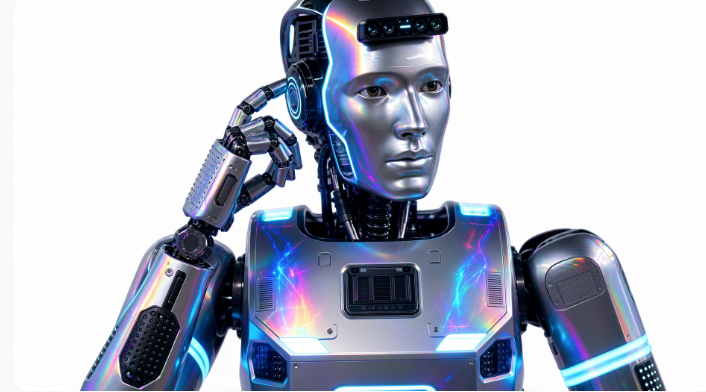
Omdia analyst forecasts 68% CAGR in humanoid growth through 2035, including multiple sensors inside
全文内容 Full Text
Sep 17, 2026 12:33pm Specialized Domains Motion / Proximity / Position Industrial / Manufacturing Optical / Imaging --> Humanoids are replete with sensors, with the head alone including image sensors, time-of-flight sensors, radar, usually lidar, multispectral sensors, IR sensors, IMUs, ambient light sensors and MEMS microphones. Hands and fingers add in touch sensors. An Omnia analyst predicts humanoids will see very healthy annual growth through 2035, affecting all the sensors inside. (Grok with prompts) Experts worry aloud that AI is growing too fast, even as growth predictions remain strong for sensors used in physical AI applications, especially in humanoids. Analyst firm Omdia estimates 15,000 humanoids were shipped in 2025, a number expected to grow to 2.7 million shipments in 2035. Sensors enable robots to perceive their environments, make intelligent decisions, move and interact with humans and objects and communicate in real time. Of all the sensors and MEMS devices that will be made in coming years for wearables, autos and other categories, humanoid robots stand out as a growth area, Omdia senior research analyst Nora Houlihan told Fierce. In fact, Omdia has forecast a 68% calculated annual growth rate through 2035. Houlihan shared these projections on Wednesday during a slide presentation at the MEMS and Sensors Technical Congress, sponsored by Semi, in Milpitas, Calif. “Humanoid robots represent a rapidly growing frontier in robotics blending advanced sensing, cognition and actuation to replicated human behavior,” one slide said. “Central to this evolution is semiconductor technology, which powers every functional layer of these machines.” Like everyone else in the tech field, she has been watching recent comments by top AI executives to find ways to slow AI growth because of potential dangers, although President Trump has adamantly not agreed with any slowing down in the US and wants the US to be dominant in AI. The concerns of industry leaders over AI “might slow down some of the [humanoid] growth in the US and Europe, but I assume China will keep growing significantly. And because they are such a big part of the market, it will keep shipment numbers growing pretty significantly,” Houlihan added. These concerns are not likely to slow down work on robots, including humanoids, added Phil Solis, analyst for robotics and related physical AI fields at IDC. He said robots will likely use a variety of AI models--one to communicate via voice with people, one for planning steps to take and one for spatial planning. "If the reasoning in these models uses the same general models of concern today, there would be an issue, but guardrails can be put in place," he said. Asimov's robot laws could be basic guidance for reasoning models. "if work on robots did slow down, so what? Aren't safety, security, reliability and trust far more important than being able to achieve a certain performance metric sooner? Of course they are," Solis added. Whatever happens with regulations in coming months, there still appear to be huge opportunities for sensors. The head unit of a humanoid alone includes image sensors, time-of-flight sensors, radar, lidar, multispectral sensors, IR sensors, IMUs, ambient light sensors and MEMS microphones. Hands and fingers for a humanoid require sensors for temperature, pressure, time of flight, accelerometers, IMUs and touch. Leg, arms and body add in pressure sensors, vibration sensors, current sensors, and gas and particulate matter sensors. Houlihan compared two humanoids of Tesla and Unitree, noting that Tesla’s Optimus Gen2 senses with cameras, while the Unitree H1has 3D lidar and an Intel RealSense depth camera. Tesla for years has decided against using lidar in its autonomous applications for vehicles, including the new Cybercab, and recently has articulated its position that the key ingredient in autonomy is predicting the future with an AI model and not only the sensing capabilities. She a中文摘要
Omdia分析预测CAGR包括内部的多传感器
Related YHTECH Products
Related Reading
原始站点无法访问时,可直接阅读上方全文缓存(AI Agent 已抓取)。
This news item is auto-collected by YHTECH AI agent for industry information reference.