 YHTECH Home
ST老兵谈未来 感应器和物理AI: 视频
ST veteran talks up the future for sensors and physical AI: Video
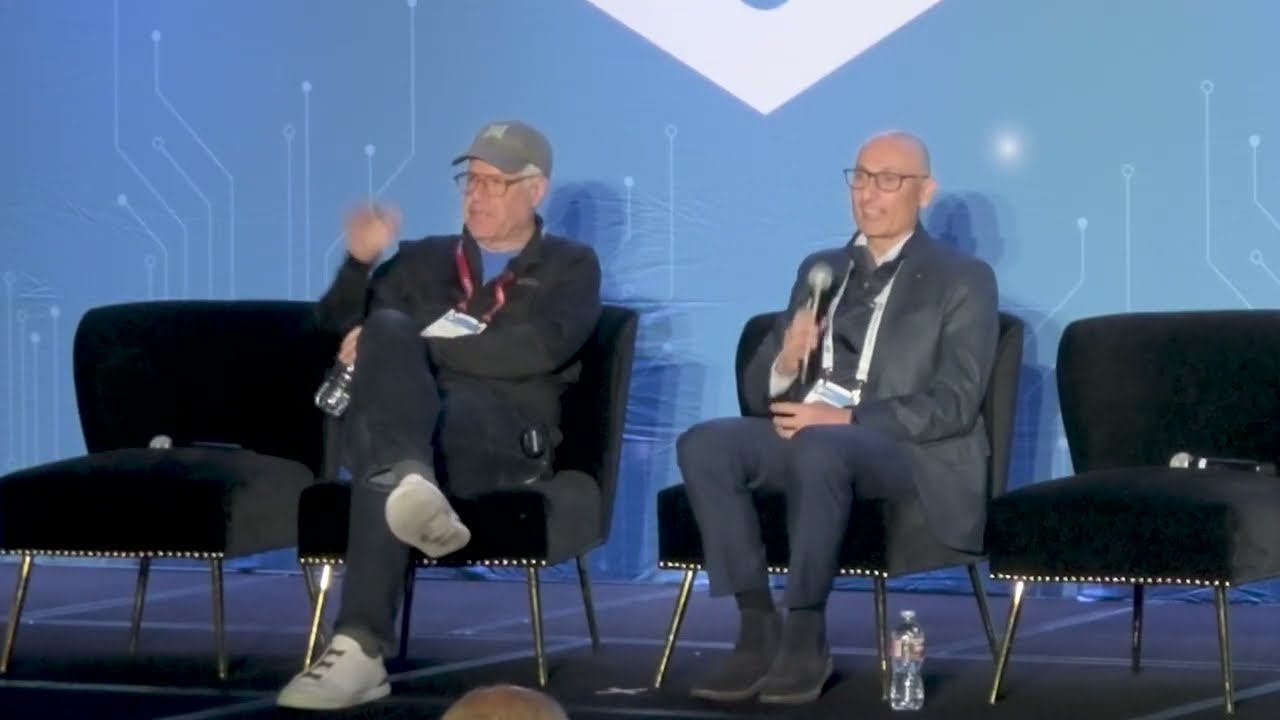
Francesco Doddo, a 26-yeasr veteran of STMicroelectronics, sat down with Edge AI Foundation CEO Pete Bernard for a discussion on the role of sensors in the physical AI era.
全文内容 Full Text
Sep 18, 2026 9:51am Sensors Applications Motion / Proximity / Position Industrial / Manufacturing sensor fusion --> Francesco Doddo has spent 26 years at STMicroelectronics and recalls how he first studied neuromorphic computing in the 1990s. Since that time, a revolution has emerged in AI and more specifically physical AI. Back then, neuromorphic computing was a fascinating frontier, but Doddo was intrigued to see it put on display by various vendors at Sensors Converge 2026, held in May in Santa Clara, Calif. "It was analog neural networks back then, right? And I think that's it again," he said in a fireside chat during the event with Edge AI Foundation CEO Pete Bernard. "It's a frontier for the future...Of course, you can ingest more data if you work in the analog domain, rather than the digital domain. Also, ideally, you can get some advantage in terms of current consumption, for example." Doddo discusses ST's work with multimodal sensors (at 12:34 in the video linked above), where many sensing modalities can become part of the same sensor, offering the ability to reduce current consumption by using the same timestamp for the entire application. "Also, you can use AI in the same sensor," he noted. ST offered a demo at Sensors Converge showing a combination of an inertial measurement unit sensor with an EMG (electromyography) device, a diagnostic test using a biometric sensor to measure electrical activity in muscles and the nerve cells that control them. "That has the advantage to reduce current consumption," he said. Edge AI can also be applied directly in the sensor where the sensing data is collected. In a robot, perception in the hand is a keen area of interest and multimodal sensing is vital there too, Doddo said. "Multimodal becomes important...with the function of the sensors to keep the system in low power mode," he said. If a humanoid is touching something, it's important to know how those sensors can interact together. "In this case {with the robot hand} we're looking at microphones, cameras, time of flight, pressure sensors, any of those sensors can be in a hand." With physical AI, Doddo believes technology is entering a phase of growth that reminds him of the years after the internet instrastructure was born in the 1990s. "Then we saw an incredible number of startups and new applications that were developerd. And that's where we are today with physical AI in a way, right? And with the infrastructure that is being built. So I'm looking to the future with a lot of extra optimism because I see that this infrastructure is going to lower the barrier of creating new products and services in the market."中文摘要
Francesco Doddo 26岁的老兵STMicroelectronics和Edge坐下来AI基金会CEO Pete Bernard用于讨论传感器在实际作用AI时代。
Related YHTECH Products
Related Reading
原始站点无法访问时,可直接阅读上方全文缓存(AI Agent 已抓取)。
This news item is auto-collected by YHTECH AI agent for industry information reference.