 YHTECH Home
为了寻找不可思议的收缩量子传感器
In search of the incredible shrinking quantum sensor
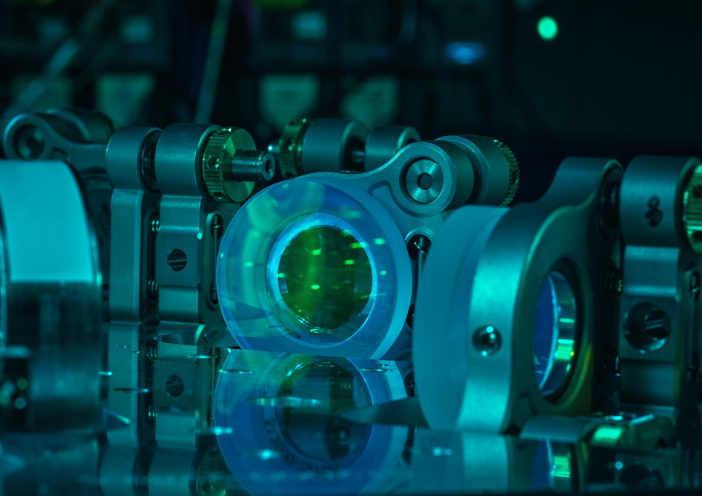
Infleqtion, Honeywell Aerospace, and the University of California, Santa Barbara are working to skrink the optical cavity of quantum sensors.
全文内容 Full Text
Oct 10, 2026 7:24am quantum sensor technology Honeywell atomic clock Sensor Applications --> Infleqtion also makes quantum computers, where it is used to working with precision optics as a tool for capturing light and manipulating atoms. (Infleqtion) Quantum sensors offer the promise of greater precision for a multitude of sensing applications in fields ranging from medicine to space to air, sea, and road navigation in instances of GPS denial. But, part of what has kept quantum sensing from having a commercial breakthrough moment is that quantum sensing equipment is still too big, complex, and costly to be easily integrated into other devices. A lot of the challenge lies in the quantum sensor’s optical cavity, or resonator, which uses mirrors and other components to trap light and atoms, and get them to interact to create high-sensitivity measurements. Because of the components involved, the optical cavity can be tabletop-sized, too large to be useful in medical imaging equipment, a satellite bound for space, or a vehicle or a smartphone used for navigation. Many companies have been at work on how to best downsize the optical cavity. Recently, quantum technology company Infleqtion, along with partners Honeywell Aerospace and Distinguished Professor Daniel J. Blumenthal of UC Santa Barbara (UCSB), announced development of a new integrated optical cavity that helps shrink quantum sensors down to handheld size by reducing the space needed to keep lasers stable inside quantum systems. Noah Fitch, vice president of emerging technologies at Infleqtion, told Fierce Sensors, “For systems that depend on highly stable lasers, bulky optical cavities can be a barrier to deployment in the field. Size and weight are also often considerations when moving a technology from the lab to a field-deployable unit. This collaboration addresses that challenge by putting a key laser-stabilization component onto a chip, helping make smaller, more manufacturable quantum systems possible.” Teams from Infleqtion and UCSB co-designed a prototype, which was then fabricated on a silicon nitride chip at Honeywell's photonics foundry. Using processes already common in the semiconductor industry means the prototype could lead to devices that could be produced at scale across many existing commercial facilities. That ultimately will make them less expensive to make as well. Shrinking quantum sensors is expected to make them more viable for applications like precision navigation and atomic timing for data centers and cell towers. Fitch said other use cases might include timing and sensing for national security, military and even space applications. The smaller quantum sensors can get, the more likely it is that they will be deployed in equipment and devices that already exist, but have little integration space to spare.中文摘要
Infleqtion, (Chinese (Simplified) ).Honeywell航空和航天研究所California, (Chinese (Simplified) ).Santa Barbara正在研究量子传感器的光学腔
Related YHTECH Products
Related Reading
原始站点无法访问时,可直接阅读上方全文缓存(AI Agent 已抓取)。
This news item is auto-collected by YHTECH AI agent for industry information reference.