 YHTECH Home
Nova Scotia Bets微电子集成,而不是芯片Fabs
Nova Scotia Bets on Microelectronics Integration, Not Chip Fabs
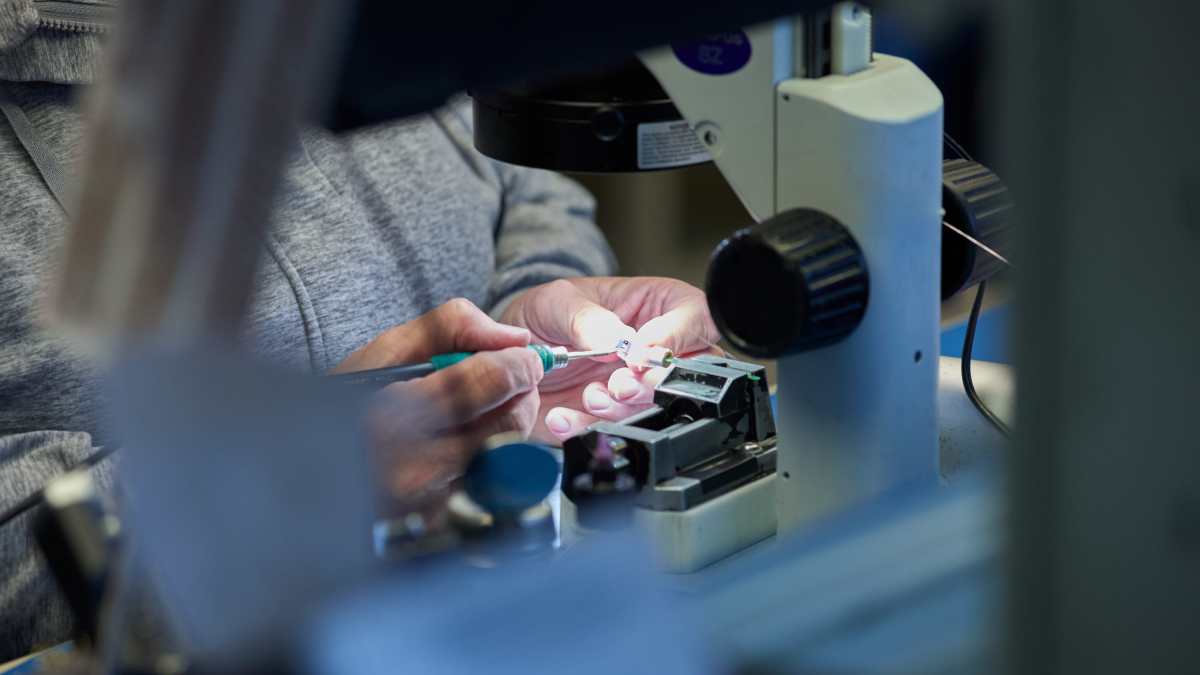
Atlantic Canada’s coastal engineering cluster is turning specialized components and rugged hardware into exportable tools for subsea research, security, and resource markets. The post Nova Scotia Bets on Microelectronics Integration, Not Chip Fabs appeared first on EE Times .
全文内容 Full Text
Nova Scotia is unlikely to become the next great destination for wafer fabs. But its semiconductor and microelectronics opportunity may be more relevant to the region’s economy: assembling the right mix of sensing, processing, communications, power, photonics, AI, and packaging technologies to solve hard problems in the ocean, in defense, in healthcare, and in energy. It’s an important distinction, Jean-François Bousquet, program director of Dalhousie University’s MINDI Hub, said in an interview with EE Times. The province’s strength is not necessarily inventing the next standalone semiconductor device but building highly integrated systems that must work reliably in remote, power-constrained, and unforgiving environments, he said. “Semiconductors will scare people away if we talk about semiconductors, but if we talk about integration of microelectronic systems, I think there’s a strong capability of integrating into various domains, especially in ocean tech,” Bousquet said. Semiconductor ecosystems are frequently measured in fabs, process nodes, venture funding rounds, or the presence of global chipmakers. Nova Scotia’s ecosystem is developing by starting with an operational problem to define applications: ocean observation, underwater robotics, sonar, fisheries, environmental monitoring, naval systems, medical technology, and renewable energy. The technology stack, which includes microelectronics, follows. For an autonomous underwater vehicle operating below Arctic ice for months, that stack can be formidable. The vehicle must sense, communicate, navigate, classify events, process data locally, and conserve every possible joule of energy. It may need AI acceleration, FPGA-based processing, GPUs in some applications, MEMS devices, photonics, lasers, specialized communications, and advanced sensing. It also needs to fit inside a very small, rugged, waterproof package. “We have to find innovative ways of integrating our microelectronics and make our autonomous vehicles smart enough to be able to go under the ice in the Arctic,” Bousquet said. “They have to communicate, they have to sense, and they have to know what’s around them.” Nova Scotia’s microelectronics story is increasingly an edge computing story—and the edge can be underwater, far offshore, or embedded in a compact defense or environmental platform. Bousquet’s group is working on a project involving autonomous underwater drones, as well as coordination between underwater and aerial systems for remote-area monitoring. Those are inherently dual-use capabilities. The same class of integrated electronics can support defense and surveillance requirements while also enabling scientific research, environmental monitoring, resource exploration, and climate-related observation. “We developed sensors that will measure the biological, chemical, and geological content of water in the ocean,” Bousquet said. Nova Scotia’s semiconductor and microelectronics development is driven by Atlantic Canada’s industrial geography. The province’s capital, Halifax, is home to a great deal of defense research, naval presence, defense primes and suppliers, universities, ocean-technology companies, and the Centre for Ocean Ventures & Entrepreneurship. The region’s proximity to the Atlantic, Arctic routes, fisheries, offshore resources, and shipbuilding is less a branding exercise than a set of practical engineering requirements. At the local level, the MINDI Hub (short for Microelectronics Innovation Design Hub) is meant to provide some connective tissue. Backed by the provincial government, the initiative is designed to support industry, develop curriculum around microelectronics for ocean technology, train students, and expand the workforce available to local companies. MINDI is part of a wider Canadian tapestry. It is hosted at Dalhousie University, which collaborates with Quebec-based experts, including those at the University of Sherbrooke and Zero Point Cryogenics, while explori中文摘要
Atlantic Canada沿海工程集群正在将专门部件和崎岖的硬件转化为可出口的海底研究、安全和资源市场工具。Nova Scotia Bets微电子集成,而不是芯片Fabs首次出现于EE时间
Related YHTECH Products
Related Reading
原始站点无法访问时,可直接阅读上方全文缓存(AI Agent 已抓取)。
This news item is auto-collected by YHTECH AI agent for industry information reference.