 YHTECH Home
统计分析如何改进半导体制造Macronix
How Statistical Analysis Improved Semiconductor Manufacturing at Macronix
Collecting data is only the first step. Its real value comes from using it to improve manufacturing. The post How Statistical Analysis Improved Semiconductor Manufacturing at Macronix appeared first on EE Times Asia .
全文内容 Full Text
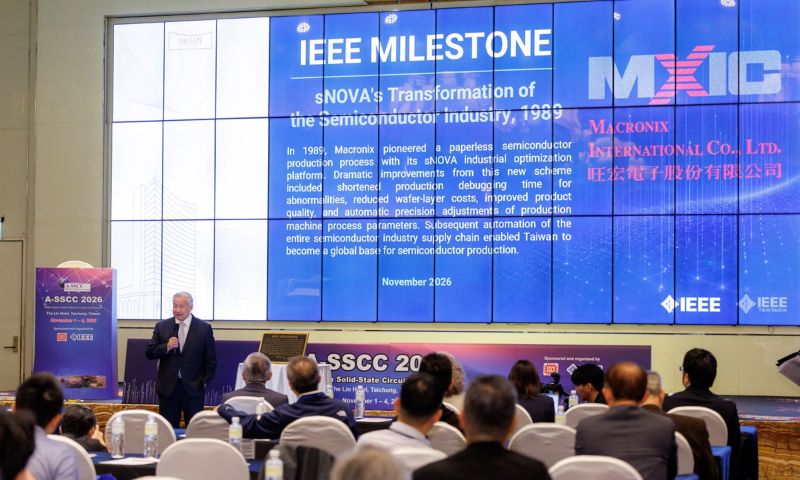
Home » AI » How Statistical Analysis Improved Semiconductor Manufacturing at Macronix Collecting data is only the first step. Its real value comes from using it to improve manufacturing. In 1989, as Taiwan was building its semiconductor manufacturing capabilities, Miin Wu, chairman of Macronix International, was already exploring how computers and statistical methods could improve fab operations. At the time, Japanese companies held a significant competitive advantage in semiconductor manufacturing, particularly in product quality, cost control and operational discipline. Closing that gap was a major challenge for Taiwan’s emerging semiconductor industry—and an important goal for Macronix. Wu initially set out to computerize factory operations to reduce the impact of human factors on manufacturing. He soon began looking beyond automation, however, recognizing that the data generated during production could also be analyzed to identify problems and improve processes. This effort eventually led to the development of Super NOVA (sNOVA), an industrial production optimization platform named after the astronomical phenomenon. Developed by Macronix between 1989 and 1997, sNOVA brought statistical analysis into semiconductor manufacturing, enabling engineers to use equipment and process data to improve production efficiency, product quality and reliability. Nearly four decades after development began, the platform has been recognized with an IEEE Milestone, making Macronix the first semiconductor company in Taiwan to receive the distinction. The recognition also highlights Taiwan’s early contributions to advances in semiconductor manufacturing. Jill Gostin, 2026 IEEE President-Elect, said sNOVA helped engineers make sense of complex information, make better decisions and turn engineering data into meaningful insights. The achievement reflects how the Macronix team recognized the value of manufacturing data and invested in analyzing it long before data-driven manufacturing became common practice. Jill Gostin, 2026 IEEE President-Elect, presents the IEEE Milestone plaque to Macronix Chairman Miin Wu in recognition of sNOVA’s contributions to the semiconductor industry. (Source: Macronix) Wu recalled that Japanese semiconductor companies were highly competitive in global markets around 1989. To strengthen Taiwan’s manufacturing capabilities, he decided to use computer systems to manage factory operations and reduce production variations caused by human factors. Since few companies had adopted this approach at the time, much of the necessary software and functionality had to be developed in-house. When Wu founded Macronix in 1989, he brought more than 40 experienced engineers back to Taiwan from Silicon Valley. According to the company, the team set out to build a semiconductor manufacturer capable of competing with Japanese suppliers by delivering high-quality products. As the computerized production lines took shape, the fab began generating and accumulating increasing amounts of manufacturing data. Wu saw an opportunity to go beyond simply collecting it. “Since we can already collect data through computers, why not use it to improve manufacturing?” he recalled thinking. That idea became a starting point for sNOVA. Macronix subsequently brought in statistical specialists to combine their expertise with semiconductor process knowledge and apply analytical methods on the factory floor. Through factory computerization and the implementation of its management systems, Macronix also established what it described as the world’s first paperless semiconductor fab. The company said its quality management capabilities helped improve its product-defect metrics from the parts-per-million (PPM) range to the parts-per-billion (PPB) range. sNOVA’s contribution went beyond digitizing production records or inspecting finished products. It applied statistical methods to manufacturing processes, helping engineers identify the sources of proble中文摘要
收集数据只是第一步,它的真正价值来自利用它来改进制造业。Macronix首次出现于EE时间Asia。 。 。 。
Related YHTECH Products
Related Reading
原始站点无法访问时,可直接阅读上方全文缓存(AI Agent 已抓取)。
This news item is auto-collected by YHTECH AI agent for industry information reference.