 YHTECH Home
边缘AI将农业情报从云层移到田地
Edge AI Moves Agricultural Intelligence from the Cloud to the Field
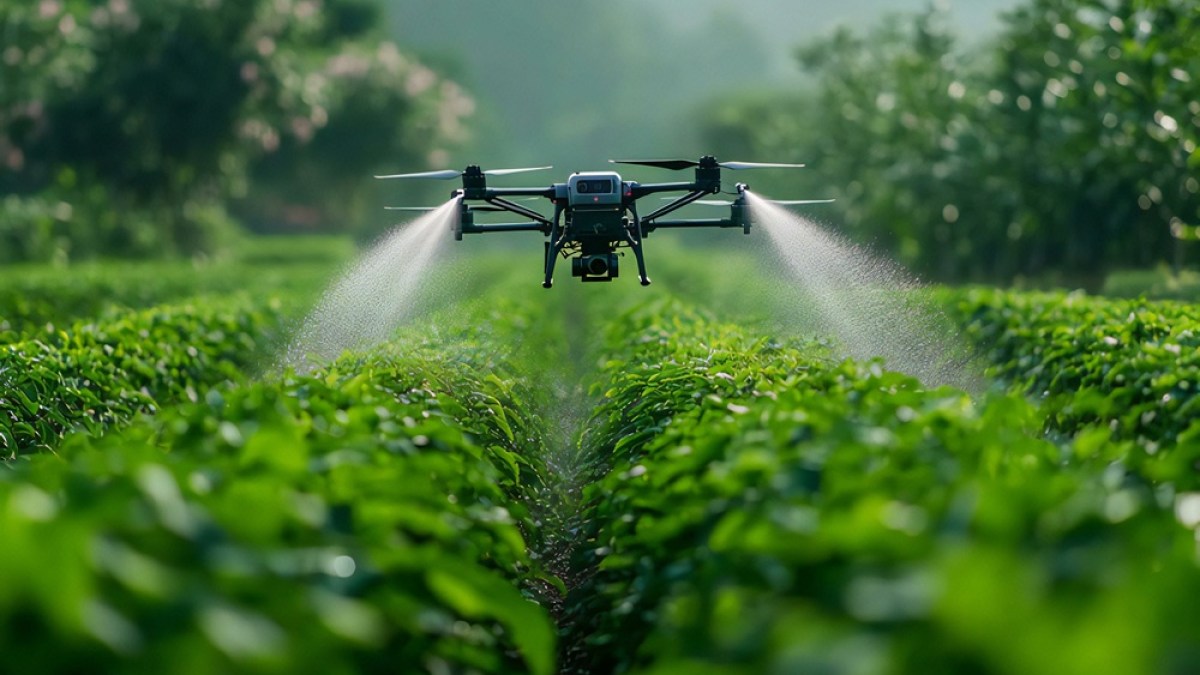
NXP and Nvidia tackle the challenges of delivering computing power, energy efficiency, and safety as agricultural machinery becomes autonomous. The post Edge AI Moves Agricultural Intelligence from the Cloud to the Field appeared first on EE Times .
全文内容 Full Text
An agricultural robot moving through a field must do more than collect information: It must interpret what its sensors detect, decide what to do, and potentially act before it reaches the next plant. Sending data to a remote computer for analysis is not always practical, particularly when connectivity is unreliable or decisions must be made immediately. Xin “Rex” Sun, director of the Peltier Institute for Advancement in Agricultural Technology at North Dakota State University, is confronting that problem in research on AI-assisted crop monitoring. His laboratory is developing a field platform equipped with sensors that could diagnose crop problems and eventually support interventions. The research involves powerful computing systems, but Sun wants the resulting applications to run on equipment that farmers can use in their fields. “Edge AI will be the go-to approach, because if the technology can’t run on a robot, combine, or tractor, it’s of little use to farmers,” Sun said. “Farmers aren’t sitting in laboratories doing research. They need technology that works in the field.” His team uses Nvidia GPUs for demanding research workloads, alongside smaller computing platforms such as Raspberry Pi and Arduino for other functions. The distinction illustrates a fundamental design choice: Different tasks require different amounts and types of processing. As agricultural machinery becomes more autonomous, equipment manufacturers must make those choices across increasingly complex systems. The challenge is no longer simply getting an AI model to recognize something; it’s giving a machine enough intelligence to respond appropriately without exceeding its power budget or compromising safety. Nvidia’s Chen Su, head of edge AI product marketing, said in written responses to EE Times that agricultural systems are moving beyond individual applications such as crop classification, weed detection, and plant health monitoring. “Many systems are evolving from single-purpose vision applications into multi-workload edge AI platforms that run perception, crop analysis, localization, navigation, obstacle avoidance, and control together,” Su said. A precision sprayer, for example, must identify a target and activate the appropriate mechanism at the right moment. A more autonomous machine must also determine its location, navigate the field, detect obstacles, and coordinate its movements with the agricultural operation. These workloads place different demands on processors. According to Su, the computing requirements depend on sensor count and type, model complexity, machine speed, reaction times, and the number of simultaneous tasks. The need for onboard processing goes beyond the limited connectivity common in rural areas. Even with a reliable network connection, sending information to the cloud and waiting for a response can introduce unacceptable delays when a machine is moving. Su described the architectural change as a move from “sense and report” toward “sense, decide, and act.” That requires more capable onboard computing, sensor fusion, real-time control, and software for developing and validating autonomous systems. Nvidia’s Jetson platforms target such embedded AI workloads, where computing performance must fit within constraints on size, power consumption, heat, and cost. Not all of the processing needs to take place in one computer. Cameras and intelligent sensors can perform image processing, compression, filtering, and some object detection locally. A more powerful central processor can combine information from multiple sensors to support navigation and planning. The cloud remains useful for training models, simulation, fleet management, and analytics. But Su expects the principal change over the coming years to be the emergence of complete autonomy stacks running onboard agricultural machines rather than individual AI features operating in isolation. For NXP Semiconductors, the problem is not simply how to provide more c中文摘要
NXP和Nvidia随着农业机械的自主化,应对提供计算能力、能源效率和安全方面的挑战。AI将农业情报从云端移到田地 首次出现在EE时间
Related YHTECH Products
Related Reading
原始站点无法访问时,可直接阅读上方全文缓存(AI Agent 已抓取)。
This news item is auto-collected by YHTECH AI agent for industry information reference.