 YHTECH Home
Electronica 2026 发光机器人和物理AI作为关键行业趋势
Electronica 2026 spotlights robotics and physical AI as key industry trends
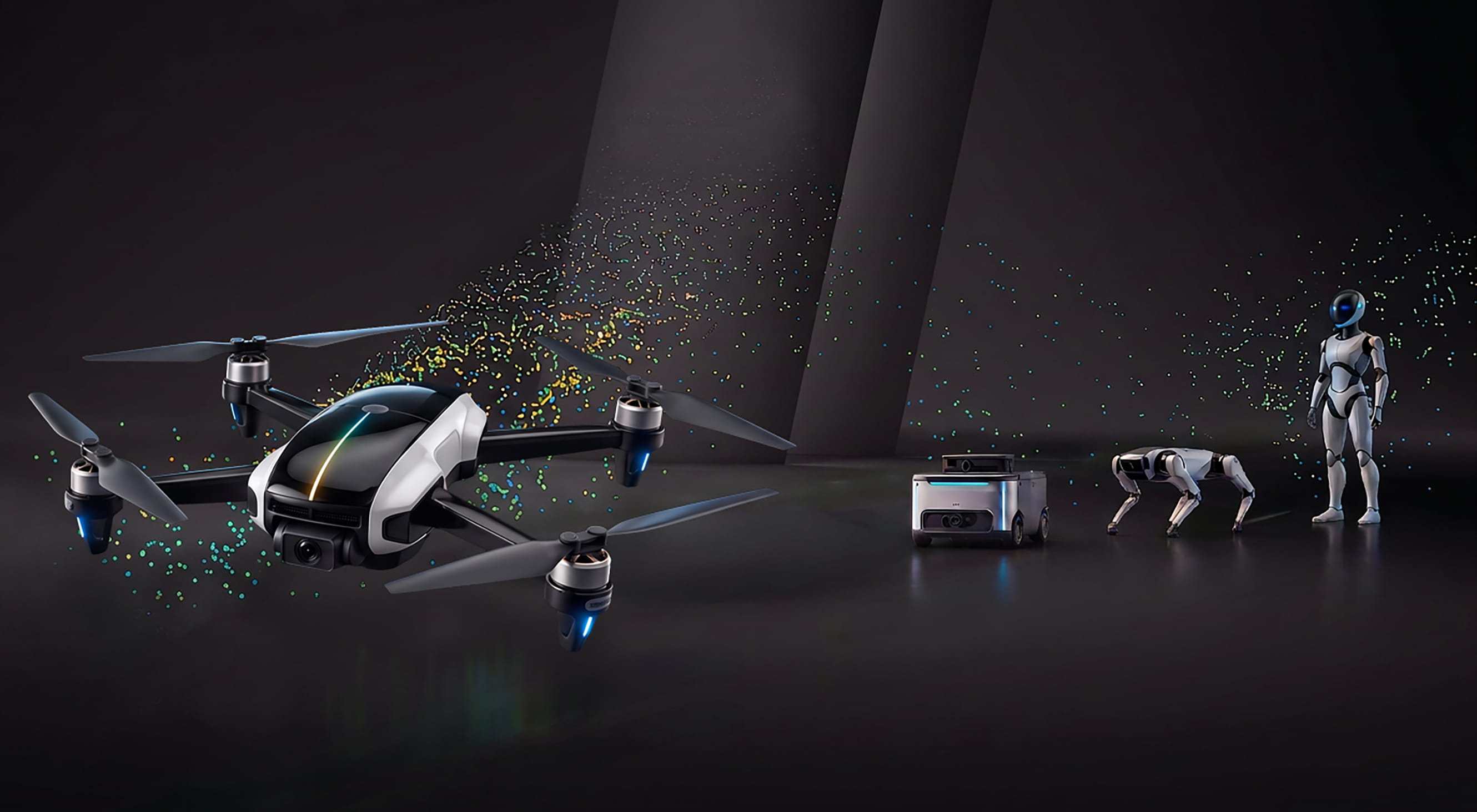
At electronica 2026, chipmakers emphasize platform approaches for MCU and MPU portfolios to simplify robotics and physical AI development. The post Electronica 2026 spotlights robotics and physical AI as key industry trends appeared first on EDN .
全文内容 Full Text
Electronica hosted 3,512 exhibitors and over 86,000 visitors at this year’s show in Munich. AI was this year’s key topic, along with a focus on an All Electric Society. The show was held in parallel with SEMICON Europe, highlighting innovations in semiconductor manufacturing. Innovations showcased at electronica reveal a trend toward platform approaches by chipmakers for their microcontroller (MCU) and microprocessor (MPU) portfolios. The strategy is to simplify development while allowing engineers to reuse their designs across products and preserve existing software development, which translates into a faster time to market and lower investment risk and cost. Chipmakers are also moving toward unified development platforms, particularly for robotics and physical AI, that both accelerate embedded system development and deliver more adaptable and scalable embedded designs. The platforms address the increased challenge of connecting sensors, real-time control, AI processing, and communications in robotic systems and subsystems. Here is a sampling of chips and development platform innovations in the robotics and physical AI space showcased at electronica 2026. At electronica, GigaDevice officially launched its new-generation GD32H7 MCU portfolio built on a unified chip architecture. The product lineup targets three core industrial applications: industrial human-machine interfaces (HMIs), general industrial automation, and robotic servo joint control. GigaDevice described the portfolio as a fully integrated MCU solution with a unified architecture, clear product classification, and development reusability. It is built from a homologous silicon die with tailored IP configuration, peripheral optimization, and scenario-specific tuning. All MCUs in the GD32H7 family feature a high-performance Arm Cortex-M7 core, offering dual frequency options of 600 MHz (GD32H77x series) and 750 MHz (GD32H78x series) with a maximum CoreMark score of 3,736. It includes a 640-KB CPU-synchronous tightly coupled memory (TCM), supporting zero-wait instruction and data execution, which enhances operational stability and response speed for complex algorithms, high-frequency tasks, and real-time control workloads. The GD32H7 series also integrates a range of industrial-grade peripherals, including multiple U(S)ART, I 2 C, SPI and I 2 S interfaces; two 10-/100-Mbits/s Ethernet ports; and three CAN-FD high-speed buses. The entire portfolio adopts unified storage specifications, including 2-MB high-speed executable flash, 8-MB large-capacity storage flash, and 1.2-MB high-speed SRAM. Dual OSPI high-speed interfaces support a 200-MHz clock frequency and double-data-rate mode. The series is designed to improve processing efficiency for motor control, signal analysis, and algorithm computation with a dedicated hardware math acceleration engine that supports trigonometric calculation, FFT, and FIR filtering. Universal security and functional safety capabilities are implemented across the full product lineup. This includes IEC 61508 SC3 (SIL 2/SIL 3) functional safety certification from TÜV Rheinland and a complete functional safety development suite including safety manuals, FMEDA reports, and dedicated self-test libraries. Integrated hardware security modules feature AES encryption, SHA-256 hash verification, a true random-number generator, and a unique chip UID. It is also designed to help meet the cybersecurity requirements of the EU Cyber Resilience Act and mainstream industrial safety compliance standards. GigaDevice showcased a six-axis collaborative robotic arm powered by the GD32H77R MCU , featuring an Arm Cortex-M7 core running at up to 600 MHz for high-performance, real-time joint control. The GD32H774 is a dedicated MCU for robotic joint servo control, custom-designed for collaborative robots, humanoid robots, and high-precision servo equipment. Key features include an integrated EtherCAT SubDevice controller and two 100-Mbits/s Ethernet PHYs中文摘要
在 2026 电子a 中,芯片制造者强调平台方法MCU和MPU简化机器人和物理组合AI员额Electronica 2026 发光机器人和物理AI关键行业趋势在EDN。 。 。 。
Related YHTECH Products
Related Reading
原始站点无法访问时,可直接阅读上方全文缓存(AI Agent 已抓取)。
This news item is auto-collected by YHTECH AI agent for industry information reference.