 YHTECH Home
这个U.S.实值Reshoring芯片——但是,It's仍然缺少董事会Designers
The U.S. is Reshoring Chips — But It's Still Missing the Board Designers
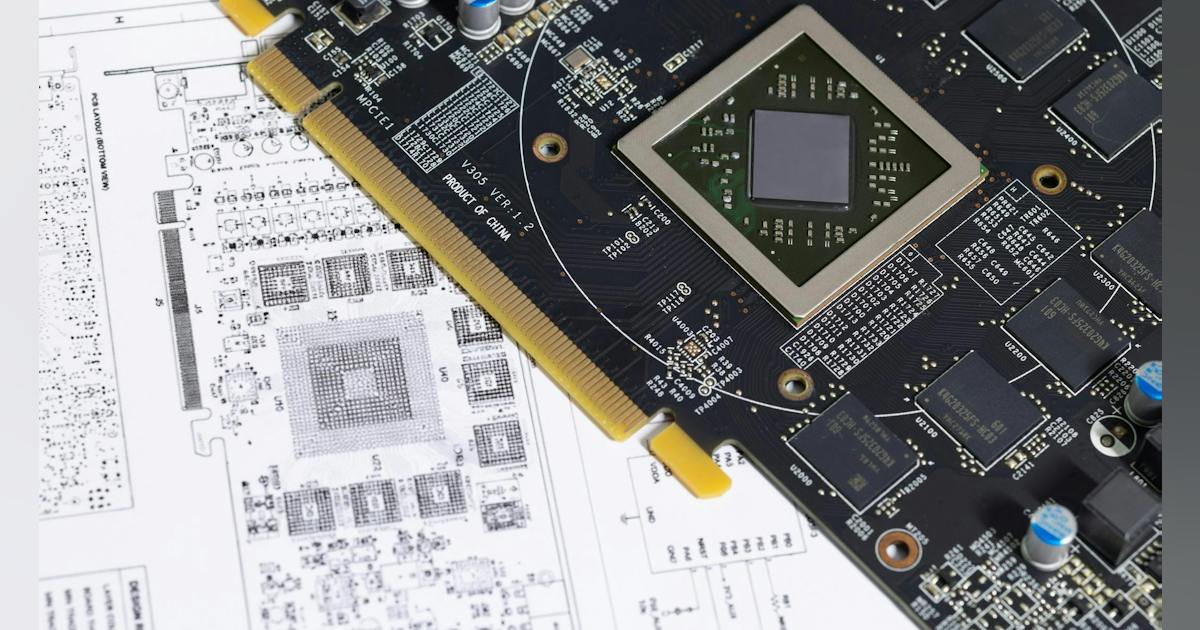
The U.S. has poured tens of billions of dollars into reshoring chip manufacturing. However, is the real bottleneck in PCB production?
全文内容 Full Text
Advanced chips have been getting hit by tariffs for years, with policymakers framing them as efforts to rebuild America's semiconductor supply chain. But one piece of that supply chain hiding in plain sight rarely gets the same attention: the printed circuit board (PCB) . While the U.S. has invested tens of billions of dollars through the CHIPS Act to reshore chip manufacturing, the PCB remains a critical, unsolved link in the electronics supply chain . Reduced resources, a lack of policy incentives, and a shrinking pool of qualified talent have left this part of the industry largely to fend for itself. Fabricating the chip is only one early step in the long process of manufacturing a full system. Every CPU, every GPU, and every other piece of AI hardware needs a PCB to connect it to power, memory, sensors, and other boards. The PCB layout is also the one component in any electronic system that’s never a commodity. Chips are mass-produced and sold off the shelf, but every board needs to be custom-designed for its specific application before even one can be fabricated. That design step is the bottleneck, both in AI hardware and equally in robotics, defense, aerospace, EVs, and telecom. The numbers tell the story. Since the 1990s, the U.S. share of global PCB production has dropped from approximately 30% to 4% today, according to data from the Printed Circuit Board Association of America . The number of domestic PCB fabricators has fallen from more than 2,000 to about 145 over the same period, and the U.S. now produces only about 1% of the world's PCBs directly. Thus, engineers in the U.S. rely largely on Asia for roughly 90% of their boards, with more than half coming from China. Years of offshoring has left the U.S. with a structural dependency on foreign supply chains, creating an infrastructure gap in which American companies still can't build fast enough to meet demand. Policymakers have started to notice. A 2018 Department of Defense industrial base assessment, conducted under Executive Order 13806 , called the domestic PCB industry "aging, shrinking, and failing to maintain the state of the art," and flagged that some advanced board types were "simply not producible in the U.S.” Mike Cadenazzi, the current U.S. assistant secretary of war for industrial base policy, has since warned that chips, substrates, and PCBs represent "multiple avenues of attack for a potential malicious actor," with worst-case scenarios including missiles that malfunction in flight due to compromised boards. In early 2023, the U.S. invoked Defense Production Act Title III to support domestic PCB production, and the Department of Defense has since put more than $118 million in DPA grants behind manufacturers. That includes $11.7 million awarded in 2024 specifically to expand PCB assembly capacity for hypersonic weapons. A bipartisan bill, the Protecting Circuit Boards and Substrates Act (HR 3597), would add a 25% tax credit and a $3 billion assistance program modeled on the CHIPS Act. But it remains in committee. Every one of these interventions targets the same three things: fabrication, substrates, or assembly. None of them touch the bottleneck upstream of all three: design. Every board that ships from a U.S. factory starts as a design file that takes weeks or months to produce by hand. However, the workforce that produces those files is shrinking faster than it can be replaced. Senior designers take 10 to 20 years to develop the intuition required by the job. Colleges aren't graduating PCB layout talent anywhere near replacement rate. For every three senior engineers retiring, only one to two new graduates enter electrical engineering, and not everyone ends up in PCB layout (see figure) . For U.S. college students, computer science is a significantly more popular pursuit than electrical engineering. The AI boom driving unprecedented demand for PCBs is also the force most capable of addressing the talent and throughput constraints on中文摘要
这个U.S.已经投入了数百亿美元用于重塑芯片制造。PCB生产?
Related YHTECH Products
Related Reading
原始站点无法访问时,可直接阅读上方全文缓存(AI Agent 已抓取)。
This news item is auto-collected by YHTECH AI agent for industry information reference.