 YHTECH Home
PCBA测试策略:如何选择正确的方法和Tester
PCBA Test Strategies: How to Select the Right Methodology and Tester
Are you struggling with PCBA defects? Learn how to optimize your PCBA testing strategy by combining In-Circuit Testing (ICT), Functional Testing (FCT with Bed-of-Nails or Flying Probe Testers. The post PCBA Test Strategies: How to Select the Right Methodology and Tester appeared first on EE Times .
全文内容 Full Text
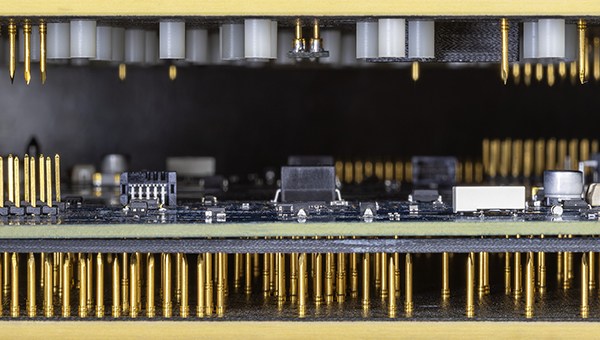
In the competitive landscape of electronics manufacturing, the pursuit of zero defects is the ultimate objective. A single malfunctioning Printed Circuit Board Assembly (PCBA) can lead to expensive recalls, damaged brand reputation, and significant safety risks. To ensure high-quality, reliable electronic products, manufacturers must deploy a robust validation strategy. But how do you choose the right testing methodology when the options, In-Circuit Testing (ICT) , Functional Testing (FCT) , Bed-of-Nails , and Flying Probe , can be complex to navigate? In this article, we will break down testing pillars and explore how integrating them can streamline your production line. The debate of In-Circuit Testing versus Functional Testing often frames them as competitors, but the reality is that they are complementary approaches of a successful quality program. In-Circuit Testing (ICT) acts as the foundational auditor of your PCBA. By probing individual components and interconnections, it confirms electrical continuity, detects shorts or opens, and validates crucial values like resistance and capacitance. ICT focuses on identifying manufacturing defects early in the cycle, such as soldering errors, component misplacement, or faulty parts, effectively answering the question of “how well it was built.” Functional Testing (FCT) takes a holistic view. It evaluates the integrated performance of the entire PCBA under simulated operating conditions, assessing parameters like voltage regulation, current draw, power factor, and operational cycles. By answering the critical question of “does it work as intended”, FCT identifies design flaws and integration bottlenecks. In large-scale production, ICT should always be performed before FCT. Using ICT as an initial quality gate to filter out assembly defects prevents manufacturers from wasting time and resources on boards that are destined to fail the more expensive Functional Test. Once you understand what to test, you must determine how to test. The equipment choice usually boils down to two main technologies: Bed-of-Nails and Flying Probe. Bed-of-Nails testers utilize a fixed matrix of spring-loaded pins that make contact with specific test points on the PCBA. Because the fixture is custom-made for the board, this method allows for the simultaneous testing of multiple points, offering exceptional speed and throughput. This makes Bed-of-Nails testers the superior choice for high-volume, mature products where the initial investment in the test fixture is offset by significant long-term efficiency. Flying Probe testers operate differently, utilizing movable probes that “fly” to designated test points across the board surface. Since no custom fixtures are required, this method significantly lowers initial setup costs and allows for rapid adaptation to design changes or prototypes. This technology is best suited for complex boards where test pads are limited or inaccessible to fixed pins. However, choosing the right test equipment must account for these fundamental pillars of modern PCBA testing requirements: Test point placement and mechanical access determine whether an ICT tester can physically and electrically reach every node it is meant to verify. This is a Design for Testability (DFT) decision made months before the board ever reaches the test floor, and it dictates which architecture is even viable: Bed-of-Nails testers need dedicated, fixed-position test pads laid out during design, while Flying Probe testers can reach arbitrary points and tolerate less generous test point provisioning. As the push toward miniaturization continues, dedicated test pads are disappearing from board layouts. Traditional Bed-of-Nails Testers, which rely on a fixed pin matrix, often prove structurally inadequate for these dense designs. When high-density designs make test pads inaccessible, Flying Probe Testers become essential. Because they do not require custom fixtures, they offer the agility to prob中文摘要
你在挣扎吗?PCBA缺陷?PCBA通过组合测试策略In-Circuit测试( E)ICT),功能测试(FCT与Bed-of-Nails或飞行探测器Testers.员额PCBA测试策略:如何选择正确的方法和Tester首次出现于EE时间
Related YHTECH Products
Related Reading
原始站点无法访问时,可直接阅读上方全文缓存(AI Agent 已抓取)。
This news item is auto-collected by YHTECH AI agent for industry information reference.