YHTECH
UWB vs RFID vs Bluetooth: Indoor Positioning Technology Compared
Choosing an indoor positioning technology usually comes down to three candidates: UWB, RFID and Bluetooth (BLE). Here is an honest comparison to help you match the technology to the job.
Accuracy: UWB Wins by an Order of Magnitude
UWB positioning delivers 10-30 cm accuracy using time-of-flight ranging - immune to signal strength variance. BLE RSSI typically gives 2-5 meters; RFID presence detection tells you a tag passed a gate, not where it is. If you need zone-level presence, RFID is enough. If you need real-time coordinates, only UWB delivers.
Cost Structure
RFID is cheapest per tag (CNY 1-5), BLE tags cost CNY 10-50, UWB tags CNY 50-300. But infrastructure cost flips the picture: UWB anchors cover 30-50 m each, while BLE needs dense beacon grids. For a 10,000 m² warehouse, total UWB cost often beats a BLE grid with usable accuracy.
Capacity & Concurrency
UWB supports thousands of tags updating at 1-50 Hz with deterministic latency - critical for forklift collision avoidance. BLE networks degrade with hundreds of devices; RFID suits inventory batch scanning rather than continuous tracking.
Power & Maintenance
BLE tags run 1-3 years on a coin cell; UWB tags need weekly charging at high update rates. Choose BLE for passive asset monitoring, UWB for active personnel and vehicle tracking.
Use Case Cheat Sheet
RFID: inventory gates, tool rooms, security access.
BLE: asset presence, room-level people flow, wayfinding apps.
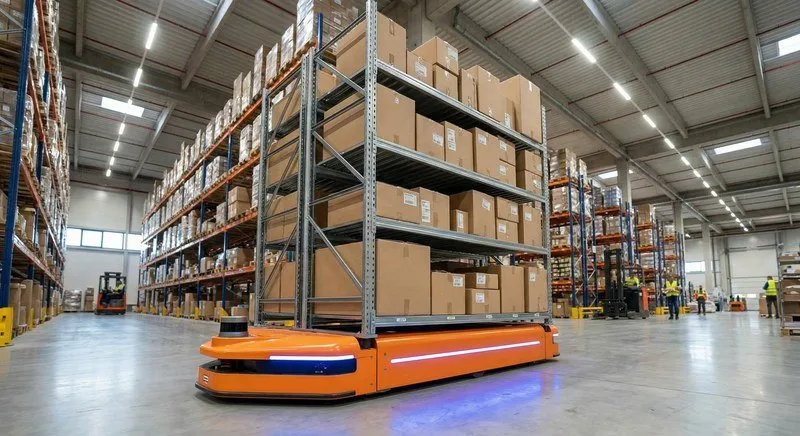
UWB: forklift/AGV anti-collision, worker safety zoning in mines, real-time asset coordinates, geofencing.
Safety-Critical Mining & Industry
In coal mines and chemical plants, the accuracy difference is a safety difference: UWB enables person-vehicle distance alarms that RFID/BLE cannot. Mining-certified UWB solutions meet China's coal mine safety standards.
YHTECH UWB precision positioning systems provide 10 cm accuracy with 1000+ tag concurrency and mining/industrial certifications. Get a site survey and deployment quote.